



Workshop #1: Interaction Design for Behaviour Change (Canceled)
Description
Behavioural change theories, models and frameworks provide extensive knowledge on selecting and identifying determinants of behaviours such as motivation to change behaviour, emotions, self-efficacy, and beliefs. Interaction designers often have limited knowledge about behaviour change theories and the process needed for behaviour change design. Interaction designers conduct field research, which not always adequately capture the required nuances of behaviour change, such as specific determinants influencing behaviours. That happens due to a lack of specific knowledge on behaviour change theories. Similarly, behaviour change-related specific goals and barriers related to behaviour change are not adequately reflected in design models.
As a result, interaction designers struggle to identify the specific needs, barriers, and facilitators of behaviour change, making it difficult to reach theory-informed design-related decisions. Consequently, resulting designs may lack the necessary depth and fail to achieve the desired behaviour change goals.
For the design of behaviour change products, field research methods and user personas must be adjusted to explicitly focus on users’ behaviour change-related needs. Although knowledge of behaviour change theories and processes is extensive, they typically lack practical guidance for direct application in product design. In this workshop, we want to initiate discussion on how field research methods and modelling user personas can be contextualised for behaviour change design.
Objectives
The workshop aims to explore how field research methods and user personas can be contextualised for behaviour change design. We aim to initiate discussions by proposing tailored templates that support behaviour change design, and examine potential issues, limitations, and challenges that practitioners can face when applying them in real-world contexts.
The outcomes of this workshop will be submitted for publication in the Behaviour & Information Technology (BIT) journal (impact factor 2022: 3.7) in a revised and enhanced version.
How to participate
We welcome interdisciplinary collaboration in the proposed group activities and therefore encourage participation from individuals with diverse backgrounds and expertise, including (but not limited to) design, psychology, human-computer interaction, and behaviour change.
No specific requirement, but Registration is mandatory: Registration form
Equipment needed on site for participating in workshop: Own laptop.
Maximum number of participants: 20-25
Organizing committee
Dr. Vladimir Tomberg, Tallinn University, Estonia
Vladimir Tomberg has a diverse educational background spanning art, engineering, and social sciences. Currently serving as an associate professor in Interaction Design at Tallinn University’s School of Digital Technologies, his expertise encompasses a wide array of fields including Interaction Design methods, design for digital Behavior Change interventions, wearable design, and accessibility. Vladimir also leads an International Master’s program in Human-Computer Interaction. This workshop is organised by the HCI for Health research group led by Vladimir.
Aishah Shah, Tallinn University, Estonia
Aishah Shah is a Junior Research Fellow and second-year Ph.D. student in Information Society Technologies, specialising in the design of digital behaviour change intervention systems. Her research focuses on user modelling through dynamic personas to capture fluctuating psychosocial states, with the goal of systematically mapping psychological theories to personalised intervention strategies. Her interests are related to intelligent, adaptive systems that are both responsive to individual needs and firmly grounded in evidence-based behavioural science.
Gulagha Gozalov, Tallinn University, Estonia
Gulagha Gozalov studied Computer Science for his bachelor’s degree, learning the fundamentals of the field. His interest in behaviour change led him to pursue a master’s in Human-Computer Interaction at Tallinn University, where he gained both theoretical and practical knowledge in Interaction Design. His current research focuses on digital behaviour change interventions, with a particular interest in domain modelling grounded in psychological theories.
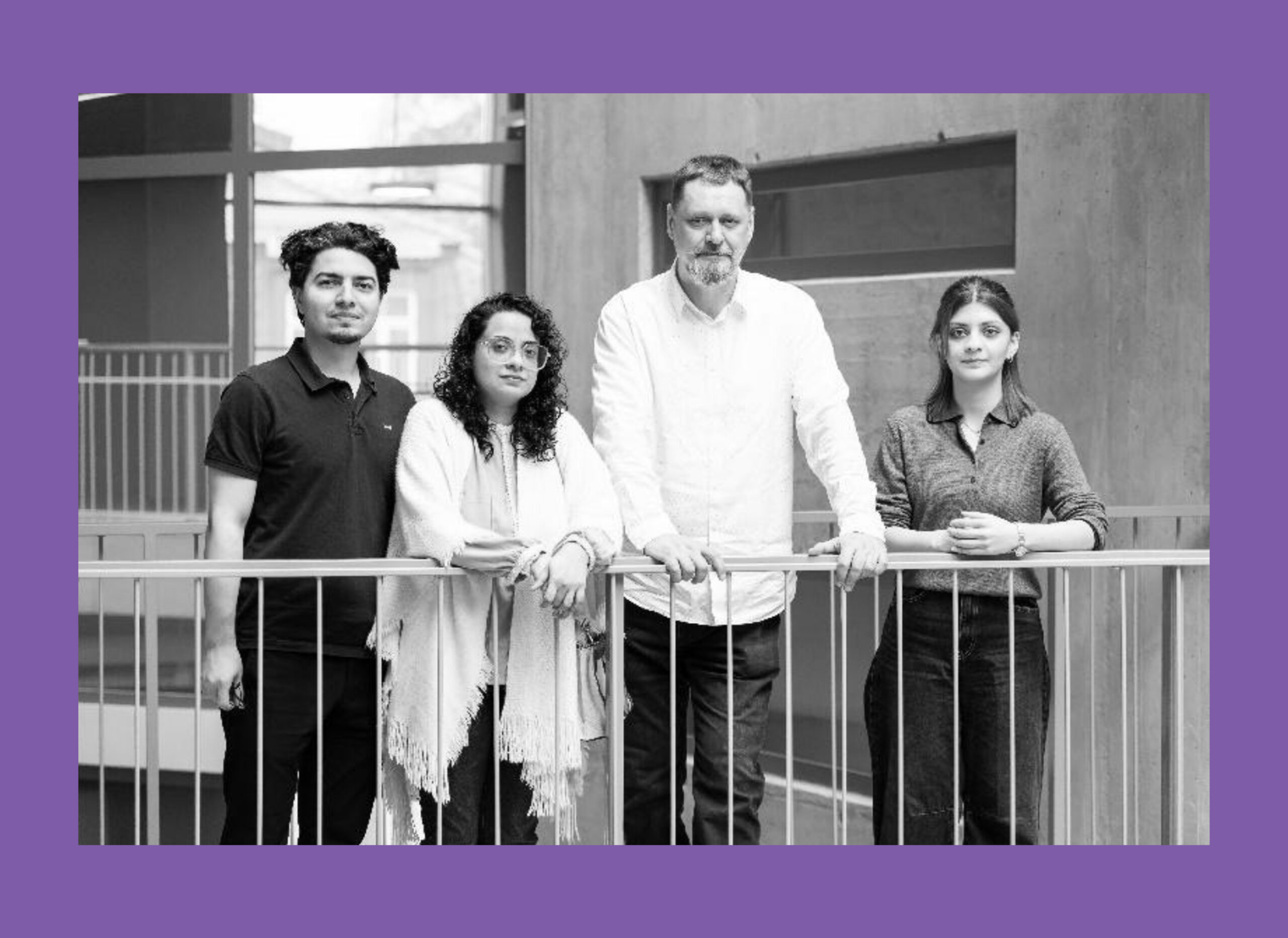
Farhat-ul-Ain, Tallinn University, Estonia
Farhat-Ul-Ain is a Junior Researcher and final-year doctoral student. Farhat holds a Bs (Hons) in Applied Psychology and Ms. in Health Psychology. Currently, Farhat is working on the research topic “Design for digital health behaviour change”. As a part of her research work, she has published several research papers and developed the DIBEC Toolkit (Digital Behaviour Change Toolkit)—a practice oriented approach that helps designers apply behavior change theories in the design process. The DIBEC Toolkit offers a structured and flexible approach that combines behavior change frameworks with interaction design methods such as field research and user personas. Farhat-ul-Ain, along with Vladimir Tomberg, designed and delivered a course on “Design of Digital Services for Health Behaviour Change” that combines strategies of both intervention design and interaction design.
Preliminary program and timeline
9:00 – 9:15: Opening, Introduction of participants
9:15 – 10:45: Short presentations on the workshop topic
10:45–12:00: Interactive discussions/ group work based on assigned tasks (field research methods)
12:00 – 12:15: Coffee break
12:15 – 13:30: Interactive discussions/group work based on assigned tasks (modelling users)
13:30 – 14:30: Lunch
14:30 – 15:30: Summary of group tasks (presentations)
15:30-15:45: Coffee break
15:45 – 17:00: Critical discussion and exploration of challenges and future collaboration
Relevant literature for workshop participation
Will be supplied during the workshop.